The Complete Guide to Comfortable Cold-Weather Driving
When you invest in a premium electric cart like the Coleman Powersports GCEV4G-T, you’re probably hoping to maximize your use throughout the year. However, the open-air design that makes these carts so enjoyable in warm weather quickly becomes a liability when temperatures drop. Without an effective heating solution, your expensive investment might sit unused for months at a time – a frustrating reality for many owners in cooler climates.
After testing numerous heating options in my Coleman golf cart over the past three winters, I’ve compiled this comprehensive guide to help you navigate the sometimes confusing world of golf cart heaters. From portable propane options to sophisticated electric systems, we’ll explore which solutions actually work, which ones to avoid, and how to install and use them safely to extend your comfortable driving season significantly.
Understanding Your Heating Needs
Before diving into specific heating options, it’s important to realistically assess your particular requirements. The ideal heating solution depends on several key factors unique to your situation.
Climate Assessment
Your local climate dictates the heating capacity required:
- Mild winter regions (occasional temperatures in the 40s-50s°F) can often manage with basic portable heaters that take the edge off the chill
- Moderate winter areas (regular temperatures in the 30s-40s°F) typically require more substantial heating capacity and some form of enclosure
- Severe winter regions (sustained below-freezing temperatures) demand comprehensive solutions combining powerful heaters with full enclosures and possibly supplemental measures
Be honest about your climate rather than optimistic – undersized heating systems create nothing but disappointment and wasted investment.
Usage Patterns
Your typical usage dramatically impacts heating system selection:
- Short trips of 5-15 minutes may be adequately served by simpler systems that provide immediate heat
- Extended outings of 30+ minutes generally require more sustainable heating approaches with fuel capacity or power supply to match
- All-day use scenarios necessitate the most sophisticated solutions with efficient operation and possibly renewable heating sources
The frequency of your cold-weather outings also influences the appropriate investment level, with occasional users typically prioritizing simplicity and cost-effectiveness over the optimization that frequent users might prefer.
Passenger Considerations
The number of people typically in your cart affects both capacity requirements and system design:
- Single-occupant setups can focus heating directly on the driver for maximum efficiency
- Multiple passengers require broader heat distribution and typically higher overall capacity
- Children or elderly passengers might have different comfort requirements necessitating more consistent heating
Consider not just how many people will be in the cart, but their typical clothing (golf attire vs. winter clothing) and personal temperature preferences.
The Three Primary Heating Approaches
Golf cart heating solutions generally fall into three main categories, each with distinct advantages and limitations that make them suitable for different situations.
Propane Heaters: Portable and Powerful
Propane-based heating systems remain among the most popular options due to their impressive heat output relative to their size and independence from the cart’s electrical system.
Advantages:
- Impressive heat output typically ranging from 3,000-18,000 BTU depending on model
- Complete independence from the cart’s battery system, preserving range
- Portability that allows transfer between vehicles or use outside the cart when needed
- Immediate heat production without warm-up periods
- Relatively affordable initial investment ($50-200 for quality options)
Limitations:
- Safety concerns requiring proper ventilation to prevent carbon monoxide buildup
- Fuel tank limitations restricting run time (typically 3-8 hours depending on model and setting)
- Regulatory restrictions in some communities, particularly in enclosed buildings
- Some models produce moisture as a combustion byproduct
- Ongoing propane costs, though generally reasonable
Top-Performing Options:
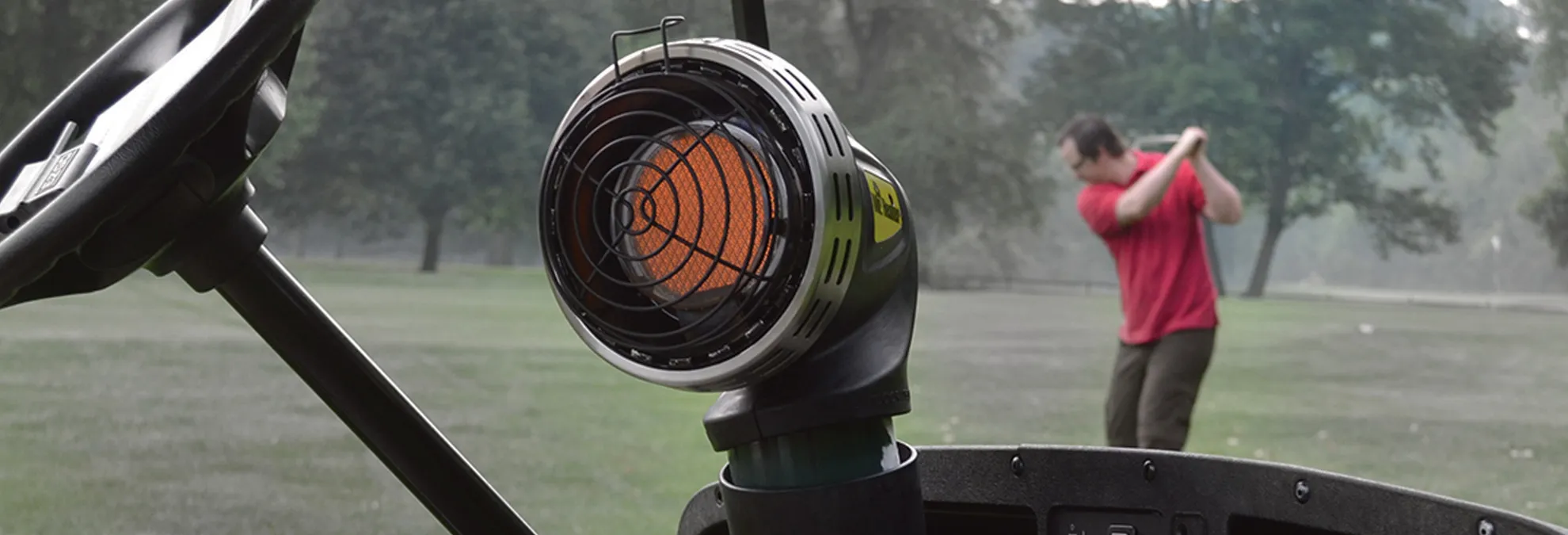
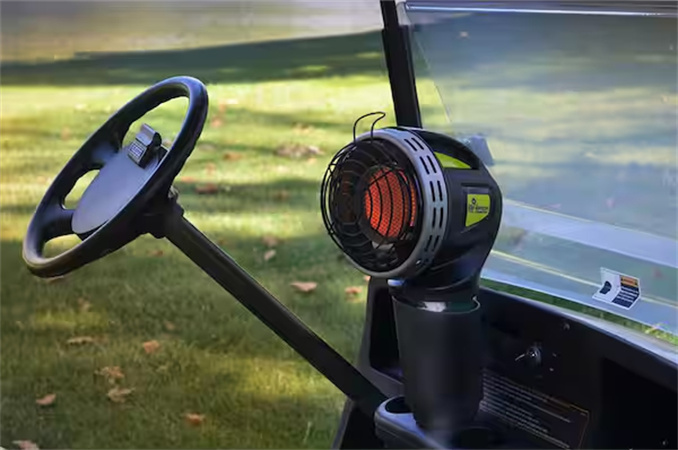
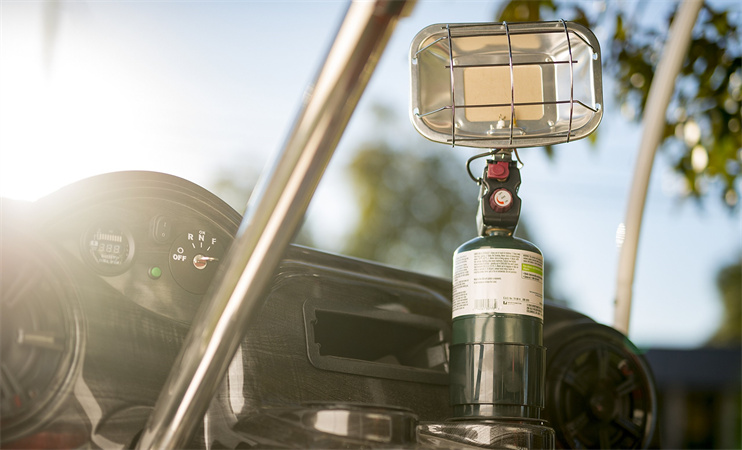
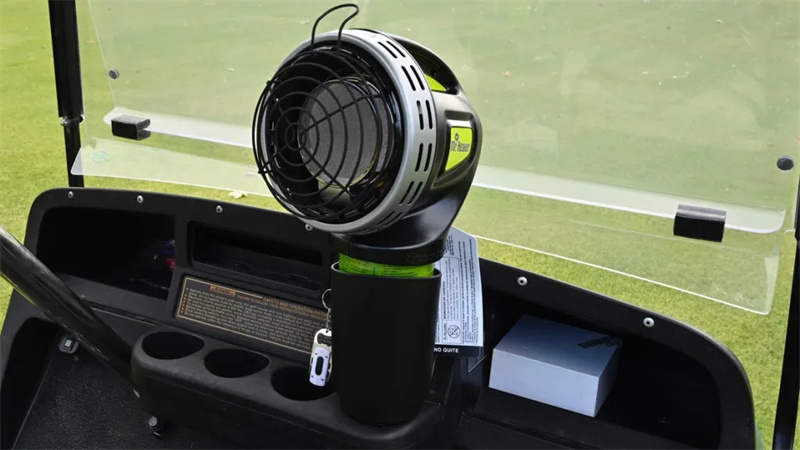
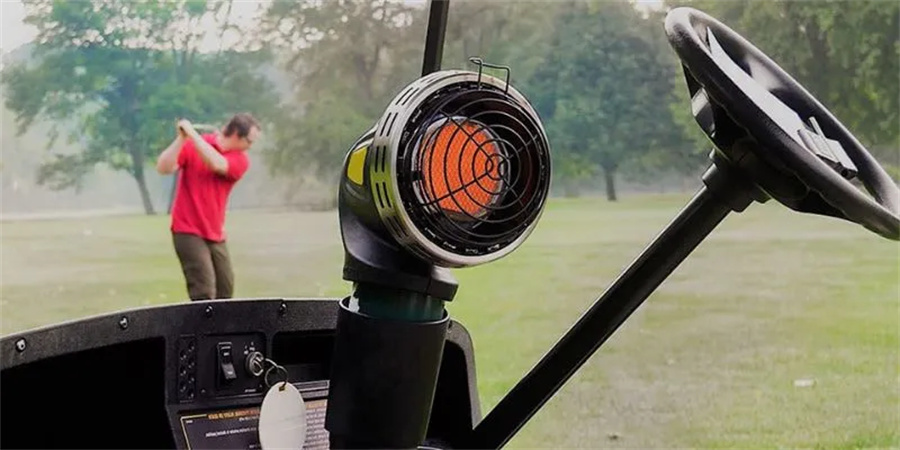
After testing multiple propane heaters, the Mr. Heater Golf Cart Heater Kit ($150-180) consistently delivered the best combination of safety, performance, and convenience. This purpose-designed system includes:
- Specialized mounting bracket designed specifically for golf cart installation
- Oxygen depletion sensor that automatically shuts off the unit if oxygen levels drop
- Tip-over safety switch that immediately cuts fuel if the unit is knocked over
- Effective heat shield to protect surrounding materials
- Capability to use either disposable cylinders or larger refillable tanks
For higher-capacity needs, the Mr. Heater Big Buddy ($180-220) offers up to 18,000 BTU output while maintaining the essential safety features, though its larger size requires more thoughtful installation planning.
Installation and Safety Considerations:
Proper installation of propane heaters is critical for both effectiveness and safety:
- Mount securely using appropriate brackets that prevent movement during operation
- Ensure adequate clearance from combustible materials (generally 12+ inches from the heating element)
- Position to direct heat toward occupants without creating burn hazards
- Install in locations that maintain proper ventilation
- Consider adding a small battery-operated carbon monoxide detector for additional safety
Even with safety features, propane heaters should never be operated in completely enclosed spaces without adequate ventilation. When using with a golf cart enclosure, always maintain some airflow with at least a partial window opening.
Electric Heaters: Clean and Convenient
Electric heating options provide clean, safe heat but must balance effectiveness with power consumption to avoid excessively draining the cart’s battery.
Advantages:
- Zero emissions with no ventilation concerns
- Complete safety with no open flame or combustion
- Silent operation without the noise of propane systems
- No ongoing fuel costs beyond the electricity used
- Lower maintenance requirements with fewer moving parts
Limitations:
- Significant power draw that can substantially reduce cart range (20-30% reduction is common)
- Limited maximum output compared to propane alternatives
- Requires adequate battery capacity to support both heating and transportation needs
- Typically higher initial investment for comparable effective heating
- May require electrical system modifications for higher-powered options
Most Effective Systems:
Among electric options, the 48V Golf Cart Ceramic Heater ($200-250) designed specifically for golf cart electrical systems provides the best balance of heat output and power efficiency. Key features include:
- Direct 48V operation without need for inverters or adapters
- Ceramic heating elements that quickly reach operating temperature
- Multiple heat settings to balance comfort with power consumption
- Integrated thermostat for temperature regulation
- Mounting bracket designed for golf cart installation
For those willing to make a larger investment, the 48V Forced Air Heating System ($350-500) provides more car-like heating with:
- Ducted air distribution for even cabin heating
- Temperature control with automatic cycling
- More efficient heating through directed airflow
- Optional integration with defrosting systems
- More professional appearance with less intrusion into cabin space
Power Consumption Management:
The critical consideration for electric systems is managing power consumption to maintain adequate range:
- Limit heater use to when actually needed rather than continuous operation
- Consider supplementing with passive insulation to reduce required heating
- Use lower settings when possible to extend operating time
- Plan trips with charging opportunities if extended heating will be needed
- Consider auxiliary battery systems for heating-intensive usage
For the Coleman GCEV4G-T with its 48V battery system, electric heaters typically reduce range by 1-1.5 miles per hour of operation at medium settings – a calculation that helps you plan trips appropriately when heating will be required.
Infrared Heating: Targeted Warmth
Infrared heating technology provides a middle ground, offering targeted warmth with moderate power requirements.
Advantages:
- Direct warmth to occupants without needing to heat all surrounding air
- More efficient use of energy for occupant comfort
- Quicker subjective warming effect
- Lower overall power requirements than conventional electric heating
- No airflow required, reducing drafts in partially enclosed carts
Limitations:
- Uneven heating with warmer and cooler areas
- Limited effectiveness in completely open carts
- Still draws power from the cart’s electrical system
- Generally higher cost than basic electric or propane options
- Less effective at warming extremities (feet, hands)
Best Implementation:
The most effective infrared solution tested was the 12V Infrared Heating Pad System ($120-200), which includes:
- Multiple heating pads that can be positioned on seats and backrest areas
- Low power consumption suitable for extended use
- Integrated controller with variable intensity settings
- Water-resistant construction suitable for the golf cart environment
- Simple installation with basic electrical connections
For maximum effectiveness, these systems work best when incorporated into seating surfaces rather than mounted externally, providing direct contact warmth to occupants.
Enclosure Considerations: Crucial for Heating Efficiency
No matter which heating system you select, its effectiveness will be dramatically improved with an appropriate cart enclosure. Without some form of enclosure, heating simply becomes an expensive exercise in warming the outdoors.
Enclosure Options
Multiple enclosure styles offer different balances of protection, visibility, and convenience:
- Full enclosure systems ($450-800) provide complete protection with marine-grade vinyl windows and zippered doors
- Split windshield designs ($200-300) offer front protection with upward ventilation capability
- Partial enclosures ($250-400) protect from wind while maintaining more open feeling
- Track systems ($600-900) allow quick deployment and retraction of enclosure panels
For serious cold-weather use, the full enclosure system provides the most effective environment for heating, creating a contained space that allows even modest heaters to maintain comfortable temperatures in surprisingly cold conditions.
Material Quality Matters
Enclosure material quality significantly impacts both heating effectiveness and long-term satisfaction:
- Marine-grade vinyl windows maintain clarity without yellowing or cracking
- Heavy-duty fabric with proper UV inhibitors prevents deterioration
- Quality stitching with reinforcement at stress points ensures durability
- Proper design with minimal gaps prevents excessive heat loss
- Heater-compatible materials resist damage from nearby heating elements
Investing in a quality enclosure initially prevents the frustration and additional expense of premature replacement due to material failure.
Customization for Heating
When selecting an enclosure with heating in mind, specific features become particularly valuable:
- Ventilation options that allow controlled airflow without creating excessive drafts
- Access panels or paths for heater power cords or propane lines
- Heat-resistant panels in areas where heaters will be positioned
- Adequate interior volume to maintain safe distance from heating elements
- Door designs that minimize heat loss during entry and exit
Some manufacturers now offer “winter packages” specifically designed to accommodate heating systems with appropriate clearances and access points.
Supplemental Heating Strategies
Beyond primary heating systems, several supplemental approaches can significantly enhance comfort while extending the effectiveness of your main heating solution.
Passive Insulation Measures
Insulation improvements create more efficient heating environments:
- Undercarriage insulation panels ($80-150) dramatically reduce heat loss through the floor
- Reflective window coverings for nighttime use minimize heat radiation through clear surfaces
- Seat covers with integrated thermal barriers reduce contact cooling
- Weather stripping improvements seal gaps that create cold drafts
- Thermal barriers between metal frame components and interior spaces reduce conductive heat loss
These passive measures often deliver remarkable improvement for minimal investment, making them excellent first steps before committing to more expensive heating systems.
Targeted Personal Heating
Individual heating accessories provide focused warmth:
- Heated seat cushions ($40-100) deliver direct warmth where it’s most appreciated
- Battery-heated clothing items extend comfort without taxing the cart’s electrical system
- Quality lap blankets made from modern technical materials provide surprising warmth
- Heated steering wheel covers improve hand comfort during driving
- Portable hand warmers offer supplemental heat for extremities
These personal options allow customization for individual comfort preferences while the main system maintains basic ambient temperature.
Strategic Operational Approaches
Thoughtful operation enhances heating effectiveness:
- Pre-heating the cart before departure (particularly with electric systems) improves initial comfort
- Planned routes that minimize wind exposure reduce heat loss
- Scheduling usage during warmer daylight hours rather than colder evenings
- Appropriate cold-weather clothing as a foundation for heating system effectiveness
- Shorter trips with warming breaks for extremely cold conditions
These operational strategies stretch the effectiveness of whatever heating system you choose while managing expectations appropriately.
Installation Guidance: Doing It Right
Proper installation ensures both effectiveness and safety regardless of which heating approach you select.
General Installation Principles
These guidelines apply to all heating systems:
- Secure mounting that prevents movement during normal operation and unexpected maneuvers
- Proper clearance from combustible materials according to manufacturer specifications
- Positioning that directs heat toward occupants without creating burn hazards
- Accessible controls that don’t require dangerous reaching during operation
- Clean installations with proper wire/hose routing to prevent damage
Taking time during installation to ensure proper setup prevents both performance issues and potential safety hazards that might otherwise develop.
Electrical System Considerations
For electric heating options, these electrical factors require attention:
- Verify adequate wire gauge for the current requirements of your heating system
- Use proper connectors designed for vibration environments
- Install appropriate fusing to protect both the heater and the cart’s electrical system
- Consider separate switches for different heat levels or zones
- Implement a master cutoff switch for safety and battery preservation
Consulting with a golf cart electrical specialist may be worthwhile for significant electrical heating installations, particularly for systems drawing more than 20 amps.
Propane System Installation
Propane installations require specific safety measures:
- Mount fuel tanks securely using purpose-designed brackets
- Position shutoff valves for emergency access while preventing accidental activation
- Ensure all connections are properly tightened and tested for leaks
- Implement proper venting according to manufacturer specifications
- Consider professional installation for complex propane systems
The safety implications of propane installations justify additional caution and potentially professional oversight for those without specific experience.
Real-World Performance Data
After testing various heating configurations in temperatures ranging from 15°F to 45°F, certain combinations consistently delivered superior performance.
Most Effective Combinations
These system combinations provided the best results in testing:
- Mr. Heater Golf Cart Kit + Full Enclosure + Floor Insulation: Maintained interior temperatures 30-35°F above ambient without battery drain, effectively keeping the cart comfortable even in 20°F weather.
- 48V Forced Air System + Full Enclosure: Delivered car-like comfort with excellent heat distribution, though range reduction of approximately 25-30% limited overall operating time.
- Infrared Seat Pads + Partial Enclosure + Windshield: Provided excellent personal comfort with minimal power consumption, though less effective for passengers not in direct contact with heating elements.
Performance By Temperature Range
Testing revealed distinct effectiveness thresholds:
- 35-45°F: Most basic systems provided adequate comfort, with even portable heaters maintaining comfortable conditions in partially enclosed carts.
- 25-35°F: Required more comprehensive approaches, with full enclosures becoming essential and higher-output heating systems necessary for extended comfort.
- Below 25°F: Demanded combination approaches, typically incorporating both primary heating systems and supplemental measures while accepting some compromise in ideal comfort levels.
These real-world thresholds help set realistic expectations about what’s achievable at different temperature ranges.
Budget Considerations: Investment vs. Return
Heating solutions represent significant investments that should be evaluated against your actual usage patterns and comfort requirements.
Cost-Effective Starting Points
For those with limited budgets or uncertain usage patterns, these entry points offer good value:
- Quality windshield + Mr. Heater Portable ($200-250 combined): This basic combination takes the edge off the cold with minimal investment.
- Seat heating pads + basic enclosure ($300-400): Provides targeted warmth with reasonable weather protection at moderate cost.
- DIY insulation improvements ($50-100): Often delivers surprising improvement for minimal investment, particularly floor insulation panels.
These starter approaches allow you to assess your actual cold-weather usage before committing to more expensive solutions.
Mid-Range Investments
For regular cold-weather users, these mid-tier options deliver good performance:
- Complete soft enclosure + propane heater system ($600-900): Provides reliable heating in most conditions without affecting cart range.
- Electric heating system + partial enclosure upgrades ($500-700): Delivers convenient operation with moderate range impact.
- Infrared system + strategic enclosure improvements ($400-600): Offers efficient personal warming with lower power requirements.
These balanced approaches satisfy most users’ requirements without the premium investment of top-tier systems.
Premium Solutions
For those prioritizing comfort in the coldest conditions:
- Custom hard enclosure + dual heating systems ($1,500-2,500): Combines the security of propane heating with the convenience of electric systems in a durable hard enclosure.
- Professionally installed forced-air system with defrosting ($800-1,200): Provides automotive-like comfort with integrated controls and ducted heat distribution.
- Complete thermal package with auxiliary power system ($1,200-2,000): Eliminates range concerns by separating heating power from drive system power.
These premium approaches deliver exceptional comfort even in severe conditions, justifying their cost for frequent cold-weather users.
Safety Considerations: Non-Negotiable Priorities
Heating system safety requires ongoing attention beyond proper installation.
Critical Safety Guidelines
These safety practices should be considered mandatory:
- Never operate propane heaters in completely enclosed spaces without adequate ventilation
- Install carbon monoxide detectors when using any combustion-based heating
- Maintain proper clearances from heating elements to combustible materials
- Implement automatic shutoff systems for both propane and high-draw electric systems
- Develop emergency shutdown procedures and ensure all users understand them
No comfort improvement justifies compromising these basic safety principles, regardless of the inconvenience they might sometimes present.
Children and Pet Considerations
Additional precautions apply when children or pets will be in the heated cart:
- Install protective barriers around heating elements to prevent accidental contact
- Position heaters where direct access is difficult or impossible
- Select systems with lower surface temperatures where possible
- Implement more conservative shutdown protocols when the cart is unattended
- Consider automatic temperature limiting systems
These additional precautions prevent accidents that might otherwise occur with curious children or animals.
Maintenance Requirements
Proper maintenance ensures both performance and safety throughout the heating season.
Regular Inspection Protocols
Implement these inspection routines:
- Check all mounting hardware before each use to ensure secure attachment
- Inspect fuel lines and connections monthly for propane systems
- Verify proper operation of safety features like tip-over switches and oxygen sensors
- Examine electrical connections for signs of heat damage or loosening from vibration
- Test carbon monoxide detectors according to manufacturer recommendations
Consistent inspection prevents minor issues from developing into significant problems or safety hazards.
End-of-Season Procedures
Proper storage preparations preserve system condition:
- Clean all components thoroughly before storage
- Disconnect and properly store propane tanks according to local regulations
- Apply appropriate protectants to electrical connections
- Document any operational concerns for addressing before next season
- Store removable components in climate-controlled environments where possible
These simple steps prevent unnecessary deterioration during the off-season, ensuring your system remains ready for the following winter.
Looking Forward: Emerging Technologies
The golf cart heating market continues evolving, with several promising developments potentially reaching consumer availability soon.
Innovative Approaches
Watch for these emerging technologies:
- Battery-independent electric systems utilizing separate power sources specifically for heating
- Advanced infrared technologies with broader coverage patterns
- Heat pump systems offering greater efficiency than resistive electric heating
- Integrated heating systems designed from the factory for specific cart models
- Smart controllers that optimize heating based on actual conditions and battery status
These innovations promise improved efficiency, convenience, and effectiveness as they mature and become more widely available.
Future-Proofing Considerations
When investing in current systems, these factors improve long-term viability:
- Modular designs that allow component upgrades without complete system replacement
- Universal mounting systems accommodating various heating technologies
- Controller systems capable of managing multiple heating approaches simultaneously
- Power systems designed for potential expansion
- Enclosures with standardized access points for various heating components
These design principles help protect your investment as technology evolves and your needs potentially change.
Conclusion: Creating Your Cold-Weather Comfort Strategy
The Coleman Powersports GCEV4G-T represents a significant investment in quality transportation, and extending its usable season through effective heating solutions delivers substantial additional value from that investment. By thoughtfully selecting and implementing the right combination of heating system, enclosure improvements, and supplemental measures, you can transform cold-weather operation from an uncomfortable endurance test into an enjoyable experience.
Remember that the most expensive solution isn’t necessarily the best for your specific situation. The optimal approach balances your actual usage patterns, local climate realities, and personal comfort preferences with appropriate investment levels. Starting with fundamental improvements like basic enclosures and insulation often delivers surprising benefits before proceeding to more sophisticated heating systems.
Most importantly, maintain unwavering commitment to safety throughout selection, installation, and operation. No comfort improvement justifies compromising the safety of you, your passengers, or your property.
With the right heating strategy implemented, your Coleman cart can become a year-round transportation solution rather than a fair-weather friend – extending your enjoyment and maximizing the return on your investment regardless of what the thermometer might read.